


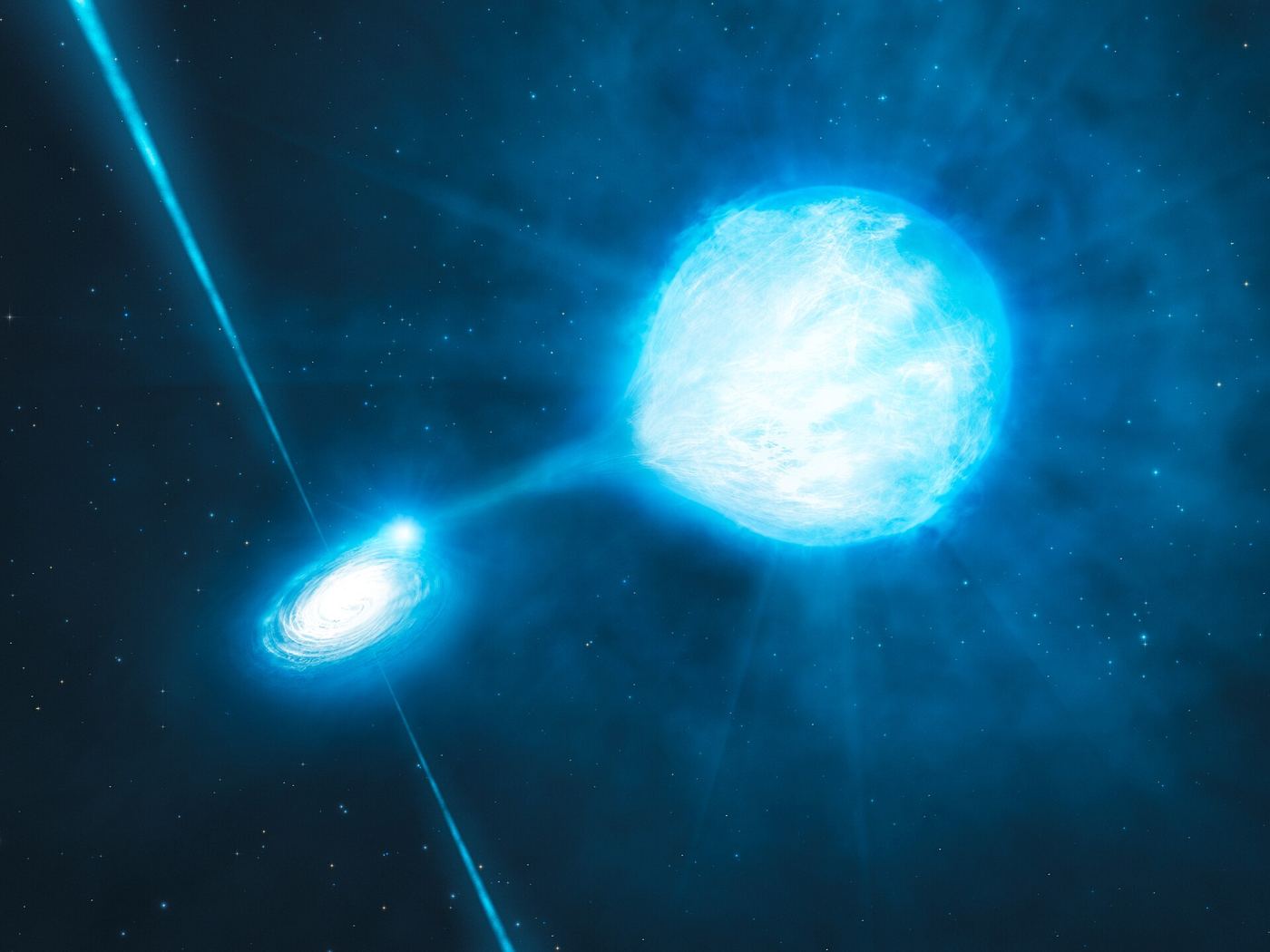
Massive stars may be quietly collapsing into black holes without ever producing the spectacular supernova explosions scientists typically expect. The surprising pattern, reported on 22 November 2026, comes from 257 black hole mergers detected by gravitational wave observatories. Some of the black holes in those mergers appear to have formed directly from massive stars that simply vanished, their cores collapsing inward without the brilliant blast that astronomers usually look for. If true, a large share of the universe’s black holes may be born in silence, leaving no flash of light to mark their creation. The mergers were recorded by the LIGO and Virgo detectors, which listen for the ripples in spacetime that colliding black holes produce.
What the Evidence Shows
Astronomers have long assumed that most black holes are born in supernovae, the explosions that scatter a dying star’s outer layers across space. A quiet collapse challenges that picture and changes how scientists count black holes and model how galaxies evolve. It also explains a puzzle: some massive stars seem to disappear from telescope images without any explosion being recorded. The evidence comes from the masses and spins of merging black holes, which carry clues about how their parent stars died. More gravitational wave detections in the coming years should show whether silent collapse is common or rare. The findings will guide the design of future observatories, which aim to catch the birth of black holes in real time. Reporting and analysis from sources such as NASA track the same developments, and specialists following silent stellar collapse into black holes say the direction is now consistent across independent lines of evidence.
The Wider Context
Funding bodies are watching silent stellar collapse into black holes closely because the work sits at the junction of basic curiosity and practical return. Grant panels increasingly ask for a path from discovery to application, while researchers push back that the most valuable uses of fundamental science are rarely the ones written into the original proposal. The tension is productive when both sides stay honest about timescales.
What Happens Next
The long view on silent stellar collapse into black holes is that fields advance by accumulation rather than by single announcements. This result adds a solid, checkable piece to a structure many teams are building, and its authors have shared their data so the piece can be tested from every side. That is how the picture eventually becomes reliable enough to act on. You can follow related developments in our coverage of science.
It is also worth remembering how quickly the picture in this area has changed before. Positions that looked settled a few years ago have been revised as new data arrived, and the same humility is appropriate now. The strongest coverage of this subject, and the most useful advice, tends to come from sources that update their views openly when the facts move, rather than defending an earlier position long after it has stopped fitting the evidence available.
