


Introduction
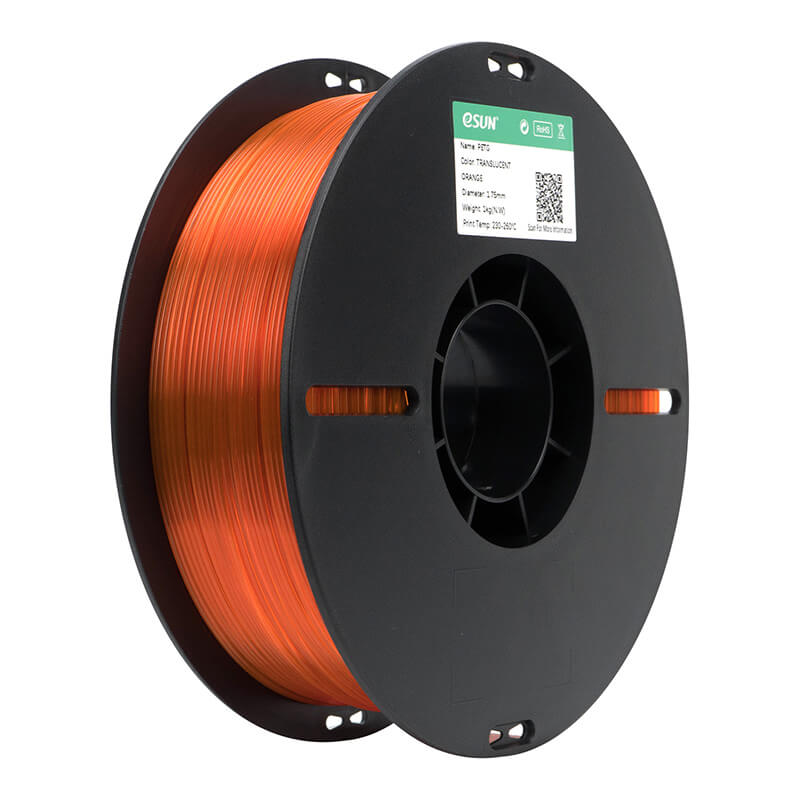
When it comes to creating strong and reliable 3D printed parts, layer adhesion is one of the most important factors. Good layer bonding helps prevent cracks, weak spots, and failed prints while improving overall strength and surface quality. Many makers, engineers, educators, and manufacturers choose PETG because it offers an excellent balance between strength, flexibility, durability, and ease of printing. As 3D printing technology continues to improve, achieving better layer adhesion has become easier with high-quality materials like PETG-Basic from eSUN.
PETG has become one of the most trusted materials for functional printing because it combines many of the best qualities of PLA and ABS. It produces durable parts with excellent impact resistance while remaining easier to print than many engineering materials. PETG-Basic expands on these advantages by providing stable extrusion, consistent filament diameter, and reliable print quality for users at every experience level. This guide explains how to improve layer adhesion, increase printing accuracy, and achieve professional-quality results using PETG filament from esun while following proven printing practices.
Why Layer Adhesion Matters in PETG Printing
Layer adhesion refers to how well each printed layer bonds with the next during the printing process. Strong bonding creates parts that can handle mechanical stress, pressure, and everyday use without splitting apart. Poor adhesion often causes weak prints that break easily, even if the outer surface appears smooth. For functional components, prototypes, brackets, and mechanical parts, strong layer bonding is essential for long-term durability.
PETG naturally provides better interlayer bonding than many common printing materials because it melts and flows efficiently during extrusion. This allows neighboring layers to fuse together more effectively. PETG-Basic from eSUN is designed with consistent material quality that supports smooth extrusion and stable printing temperatures, helping users reduce print failures while improving dimensional accuracy. Whether printing large models or detailed components, consistent layer adhesion directly improves the finished product’s performance.
Good layer adhesion also improves appearance. Prints with strong bonding typically show fewer visible layer gaps, smoother sidewalls, and better structural consistency. Since PETG has excellent chemical resistance and toughness, improving adhesion allows users to maximize all of these material advantages while producing reliable parts suitable for engineering, educational, and commercial applications.
Best Temperature Settings for Better PETG Layer Bonding
Printing temperature is one of the biggest factors affecting PETG layer adhesion. When nozzle temperatures are too low, the filament may not fully melt, preventing proper bonding between layers. When temperatures become too high, excessive stringing, blobs, or surface imperfections may occur. Finding the proper temperature range helps PETG create strong, even connections throughout the print.
Most PETG filament performs well between approximately 230°C and 250°C, although the exact temperature depends on the printer, nozzle, print speed, and environmental conditions. PETG-Basic from eSUN is manufactured for stable processing, allowing users to achieve reliable extrusion across recommended temperature ranges. Consistent filament quality makes temperature tuning easier, reducing trial-and-error during setup.
The heated print bed also contributes to successful printing. Bed temperatures around 70°C to 85°C generally help improve first-layer adhesion while reducing warping and corner lifting. Stable bed heating keeps the lower layers secure throughout long print jobs, allowing upper layers to bond evenly as the model grows. Combining proper nozzle temperature with a heated bed creates ideal conditions for strong PETG printing accuracy.
Environmental stability is equally important. Avoid placing the printer near open windows, fans, or air conditioning vents because sudden cooling can weaken interlayer bonding. A consistent printing environment allows each deposited layer to remain warm long enough to fuse effectively with previous layers, improving overall strength.
Print Speed and Cooling Settings That Improve Accuracy
Many users focus only on temperature, but print speed also plays a major role in PETG layer adhesion. Printing too quickly reduces the amount of time available for the filament to bond properly with the previous layer. Slower and more consistent print speeds usually produce stronger parts with better surface finish and improved dimensional accuracy.
For many PETG applications, moderate print speeds provide the best balance between productivity and quality. PETG-Basic supports stable extrusion that allows users to maintain consistent material flow during long print jobs. Reliable extrusion reduces under-extrusion problems, uneven layer lines, and weak bonding while maintaining accurate dimensions throughout the model.
Cooling settings require careful adjustment as well. Unlike PLA, PETG generally performs better with moderate cooling rather than maximum fan speed. Excessive cooling may cause each layer to solidify too quickly before proper bonding occurs. Using controlled part cooling helps maintain strong interlayer fusion while still preserving sharp details and clean overhangs.
Retraction settings also affect print quality. Proper retraction reduces stringing without interrupting consistent material flow. Every printer behaves slightly differently, so small calibration adjustments help optimize PETG performance. Careful tuning of speed, cooling, and retraction creates cleaner surfaces while maximizing strength and printing precision.
Choosing High-Quality PETG and PETG-Basic Filament
Even perfectly tuned printer settings cannot compensate for inconsistent filament quality. High-quality PETG filament is manufactured with precise diameter control, low moisture content, and uniform material composition. These characteristics improve extrusion consistency, resulting in stronger layers and better overall print reliability.
PETG-Basic from eSUN is developed to provide dependable printing performance for hobbyists, professionals, schools, and industrial users. Consistent filament diameter supports stable extrusion throughout long prints, helping reduce nozzle clogs, uneven flow, and unexpected printing defects. Reliable material quality allows users to focus more on design and production rather than troubleshooting.
Moisture control is another important consideration. PETG absorbs moisture from the surrounding air over time. Wet filament may create popping sounds during printing, rough surfaces, excessive stringing, and reduced layer adhesion. Proper storage in sealed containers with desiccant helps maintain optimal filament condition between printing sessions.
eSUN has earned recognition within the global 3D printing community by developing materials that combine reliability, innovation, and consistent manufacturing standards. Products available through esun support a wide variety of desktop 3D printers while offering dependable performance across educational, prototyping, engineering, and manufacturing applications. Choosing trusted PETG filament gives users greater confidence in every print.
Printer Calibration Tips for Stronger Layers
Proper printer calibration is essential for maximizing PETG printing accuracy. Even premium filament performs best when the printer is correctly adjusted. Regular calibration improves extrusion consistency, layer alignment, and dimensional precision while reducing failed prints.
The first layer deserves special attention because it forms the foundation for the entire print. Accurate bed leveling ensures the filament is compressed evenly across the build surface, creating excellent adhesion without excessive squishing. Automatic bed leveling systems can simplify this process, but manual verification remains valuable for maintaining consistent results.
Extruder calibration helps ensure the printer delivers the correct amount of material. Over-extrusion may cause rough surfaces and dimensional errors, while under-extrusion weakens layer bonding and creates visible gaps. Verifying extrusion accuracy allows PETG and PETG-Basic to perform as intended throughout every print.
Regular printer maintenance also contributes to better layer adhesion. Clean nozzles, properly tensioned belts, smooth-moving axes, and stable frame construction all improve print consistency. Replacing worn components before they affect print quality helps maintain reliable performance over time. Combined with quality PETG filament, a well-maintained printer consistently produces stronger, cleaner, and more accurate parts.
Applications That Benefit from Improved PETG Layer Adhesion
Strong layer adhesion significantly expands the range of projects suitable for PETG printing. Functional components, machine brackets, electronic enclosures, protective covers, automotive accessories, educational models, and engineering prototypes all benefit from improved structural strength. Better bonding increases confidence that printed parts will perform reliably under real-world conditions.
Many businesses choose PETG because it provides excellent durability while remaining relatively easy to print. Improved layer adhesion allows manufacturers to produce prototypes that closely resemble final production parts. Designers can evaluate fit, function, and performance before investing in expensive manufacturing processes. PETG-Basic offers dependable consistency that supports rapid prototyping, product development, and small-batch manufacturing.
Educational institutions also benefit from reliable PETG printing because students can create durable projects with fewer failed prints. Engineering classrooms, maker spaces, and research laboratories appreciate materials that balance strength with straightforward printing characteristics. PETG filament provides an excellent learning platform while producing professional-quality models suitable for demonstrations and practical testing.
Creative users appreciate PETG for decorative objects, custom organizers, cosplay accessories, household tools, and replacement parts. Strong interlayer bonding helps these prints withstand repeated use while maintaining attractive appearance and structural integrity. Reliable printing accuracy ensures finished models closely match original digital designs, making PETG one of the most versatile materials available for everyday 3D printing.
Conclusion
PETG continues to be one of the most dependable materials for users seeking strong, accurate, and durable 3D printed parts. By optimizing nozzle temperature, heated bed settings, print speed, cooling, extrusion, and overall printer calibration, users can significantly improve layer adhesion and printing accuracy. These adjustments reduce print failures while increasing the mechanical strength, surface quality, and long-term reliability of finished models.
PETG-Basic from eSUN further supports consistent printing through stable extrusion, dependable material quality, and reliable manufacturing standards. Whether producing engineering prototypes, educational projects, functional components, or creative designs, choosing premium PETG filament from esun helps users achieve professional results with greater confidence. Combining quality materials with proven printing techniques allows every layer to bond more effectively, ensuring stronger prints, better accuracy, and outstanding performance across a wide range of 3D printing applications.