


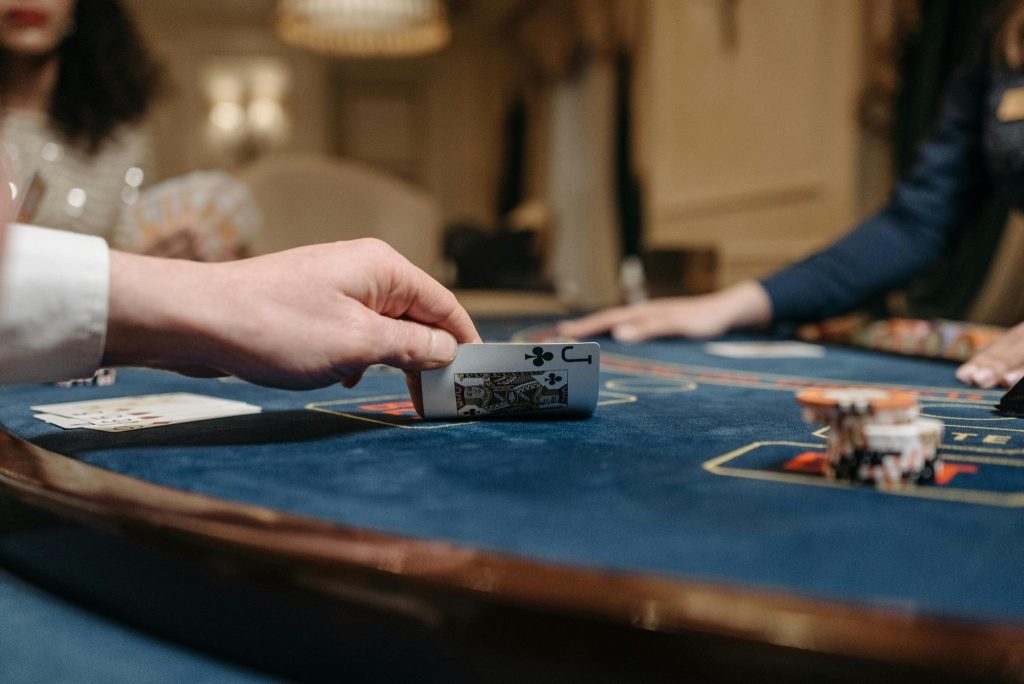
Once you know how to base your decisions on probability theory, rather than guesswork, blackjack will be a considerably more strategic game for you. This way, instead of responding personally to each card, you will make card choices based on their mathematical probabilities.
The main purpose of the article is to unveil how probability can help you analyze better, suffer fewer losses that are avoidable, and raise your general blackjack playing performance.
How to Use Probability in Predicting the Most Probable Cards
Since the card deck is limited, the remaining probabilities change with every card that is played. The exact next card is unknowable, but probability does give a hint of what is more likely. Take, for instance, a situation where the majority of low-value cards have been dealt; this means the remaining deck must be relatively rich in high-value cards. This can be quite instrumental in helping you decide whether to ask for a new card or stick with the hand you already have.
Using Probability to Determine if You Should Hit or Stand
A quick way to apply this is to visualize risk zones within your decision-making:
- Low risk total (11 or less): More opportunity to safely improve
- Medium risk total (12-16): Balanced risk depending on the dealer’s card
- High risk total (17+): More probability of busting if you hit
Identifying the Dealer’s Potential Hand
The face-up card of the dealer is one of the most crucial pieces of information you will use when you play blackjack for determining how likely the dealer will either bust or end up with a strong hand.
If the dealer’s face-up card is less than six (4, 5, or 6), the dealer is more likely to bust because they must take additional cards, and you can exercise a conservative strategy until their hand is completed and use probabilities to get the odds working for you.
Preventing Emotional Decisions with Probability Logic
Quite a number of people end up making wrong decisions when their feelings drive them and not the numbers. So, by using probability, one can rely on logic and statistics rather than the “gut feeling,” which is often wrong.
To run with this idea, here is what you need to do:
- Don’t chase losses after a bad hand
- Never assume patterns where there are none
- Look at every hand as a fresh, separate probability event
Using Probability When at the Table
Use simple habits to be successful with probability in a real game:
- Understand basic strategy charts that give you statistical probability based on the cards remaining in the shoe.
- Keep your eyes on the other players and what cards have been removed from play so far.
- Consider the dealer’s hand when deciding if you will take risks.
- Don’t allow impulse to dictate your decision to take risks after a win or loss.
Wrapping Up
By taking advantage of the principles of probability, you will have a better understanding of how to evaluate the risk of making a given choice and will be better able to read the table and make logical decisions about the choice you are making. Once you consistently apply these principles, you will notice that your ability to play more strategically and with greater control will increase, leading to an overall positive impact on your gaming results over the long run.