


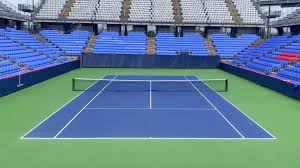
Beneath the roar of crowds and the swift choreography of athletes lies an often-unseen craft—sports infrastructure. It is not merely construction; it is orchestration. Every beam, boundary, and baseline is a calculated decision, quietly dictating how sport is experienced, performed, and remembered.
Sports Infrastructure: The Silent Architect of Competition
To speak of sports infrastructure is to step into a realm where engineering converges with human ambition. It is a layered composition—stadiums, practice facilities, medical units, audience amenities, and digital ecosystems—each functioning like a cog in an elaborate machine.
Gone are the days when facilities served a singular purpose. Contemporary sports complexes now pulse with versatility. Retractable roofs, hybrid surfaces, and digitally augmented seating arrangements have redefined what it means to host a sporting event. These venues breathe, adapt, and transform, responding to climatic shifts and audience dynamics with remarkable agility.
Yet, grandeur alone does not define excellence. The quieter domains—local courts, school playgrounds, and regional academies—carry equal weight. They are the crucibles where raw talent is refined. Without such grassroots scaffolding, elite sport would stand on fragile ground, disconnected from its developmental roots.
Tennis Court Dimensions: Geometry as a Governing Force
Within the universe of sport, tennis distinguishes itself through its unwavering allegiance to measurement. Its court is not just a playing area; it is a precisely etched canvas where strategy unfolds.
The court extends to a fixed length of 78 feet, an unalterable constant. Width, however, introduces duality—27 feet for singles encounters and 36 feet for doubles, where side alleys widen the tactical horizon.
The net, suspended with understated authority, measures 3 feet at its midpoint, ascending gently to 3.5 feet near the posts. This subtle gradient is no accident—it injects nuance into shot-making, compelling players to calculate rather than merely react.
Service boxes divide the court into zones of calculated risk. A serve must land within these confined rectangles, demanding both finesse and precision. Boundaries such as the baseline and service line act as invisible governors, ensuring that play remains disciplined yet dynamic.
Surface Dynamics: When Material Shapes Momentum
Though dimensions remain steadfast, the court’s character morphs with its surface. Clay courts temper aggression, slowing the ball and encouraging elongated rallies steeped in endurance. Grass courts, by contrast, accelerate the tempo, rewarding swift reflexes and daring plays. Hard courts sit in equilibrium, offering predictability with a hint of dynamism.
Such diversity is not incidental—it demands tailored infrastructure. The substructure beneath each surface must be engineered to support its behavioral traits. Cushioning layers, moisture control systems, and foundational stability all contribute to how the ball responds upon impact.
Engineering the Experience: Beyond Physical Boundaries
Designing a tennis facility is akin to composing a symphony. Orientation is meticulously chosen—often aligned along a north-south axis—to mitigate sunlight interference. Drainage systems are embedded with foresight, ensuring resilience against weather disruptions. Lighting, too, is crafted with precision, eliminating glare while maintaining uniform luminance.
Spectator considerations weave seamlessly into this design narrative. Tiered seating, unobstructed sightlines, and acoustic calibration transform passive viewing into immersive engagement. Accessibility is no longer an afterthought; it is a foundational principle, ensuring inclusivity across all demographics.
Where Structure Meets Performance
The relationship between sports infrastructure and tennis court dimensions is symbiotic. One cannot flourish without the other. A court measured to perfection loses its essence if housed within flawed infrastructure. Conversely, a sophisticated facility cannot compensate for inaccuracies in court layout.
Together, they establish equilibrium—a harmonious interplay where athletes perform at their zenith, unencumbered by inconsistencies or distractions.
The Horizon Ahead: Intelligent and Sustainable Arenas
The future of sports infrastructure is not static—it is evolving toward intelligence and sustainability. Smart facilities equipped with embedded sensors now track player movement, ball trajectory, and environmental conditions in real time. These insights are revolutionizing training methodologies and match analysis.
Sustainability, too, has taken center stage. Eco-conscious materials, water-efficient maintenance systems, and renewable energy integrations are reshaping facility design. Tennis courts are embracing these innovations, becoming more durable while reducing ecological impact.
Sports, in its purest form, is a dialogue between human capability and environmental structure. Sports infrastructure provides the stage, while tennis court dimensions script the rules of engagement. Together, they craft an arena where precision meets passion—and where every match becomes a testament to both design and discipline.