


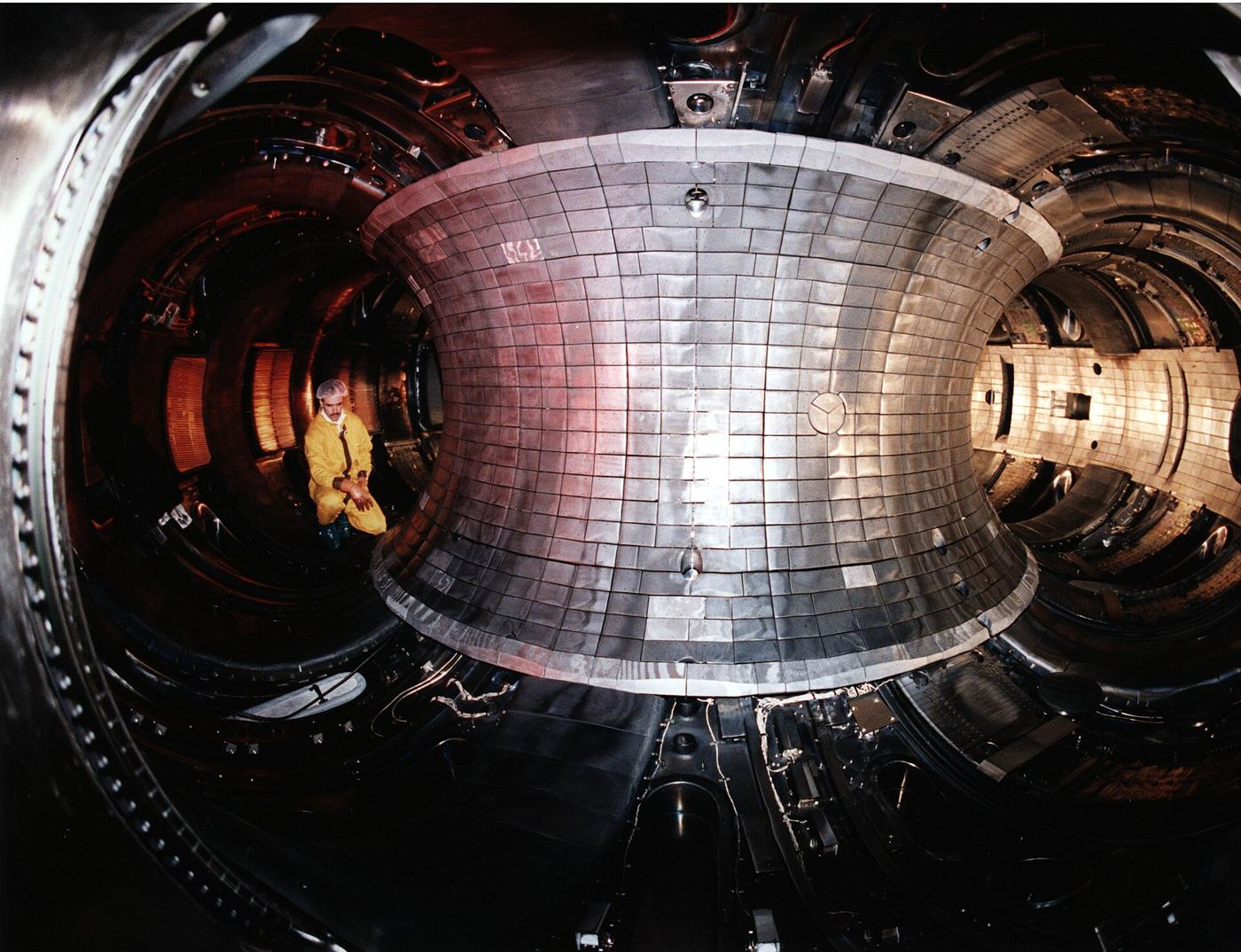
Commonwealth Fusion Systems says its SPARC reactor in Devens, Massachusetts, is about 80 percent complete, with switch-on expected in 2027 and a campaign to prove net fusion energy to follow. The compact tokamak is designed to release more energy from fusion than is used to heat its fuel, a milestone known as Q greater than one that no magnetic fusion device has yet reached. SPARC is built around 18 D-shaped superconducting magnets, each weighing 24 tonnes, that confine plasma at temperatures above 100 million degrees. The company expects the machine to produce about 140 megawatts of fusion power in ten-second pulses, with a predicted energy gain of about 11 under standard assumptions.
What the Evidence Shows
The project reached its latest milestone in November, when the company’s vice president of plasma physics, Phil Snyder, told the American Physical Society’s plasma physics meeting that the team was in the home stretch and expected to turn the machine on next year. Chief executive Bob Mumgaard repeated the message on November 13, saying SPARC was about 80 percent complete and due to start up in 2027. The schedule has already slipped once, from an original target of 2025, and SPARC will not generate electricity: it is a physics proof. If it works, the company plans to build ARC, a roughly 400-megawatt power plant, using the same magnet technology for its first power plant. Reporting and analysis from sources such as NASA track the same developments, and specialists following SPARC fusion reactor 80 percent complete say the direction is now consistent across independent lines of evidence.
The Wider Context
Funding bodies are watching SPARC fusion reactor 80 percent complete closely because the work sits at the junction of basic curiosity and practical return. Grant panels increasingly ask for a path from discovery to application, while researchers push back that the most valuable uses of fundamental science are rarely the ones written into the original proposal. The tension is productive when both sides stay honest about timescales.
What Happens Next
The long view on SPARC fusion reactor 80 percent complete is that fields advance by accumulation rather than by single announcements. This result adds a solid, checkable piece to a structure many teams are building, and its authors have shared their data so the piece can be tested from every side. That is how the picture eventually becomes reliable enough to act on. You can follow related developments in our coverage of science.
It is also worth remembering how quickly the picture in this area has changed before. Positions that looked settled a few years ago have been revised as new data arrived, and the same humility is appropriate now. The strongest coverage of this subject, and the most useful advice, tends to come from sources that update their views openly when the facts move, rather than defending an earlier position long after it has stopped fitting the evidence available.
