


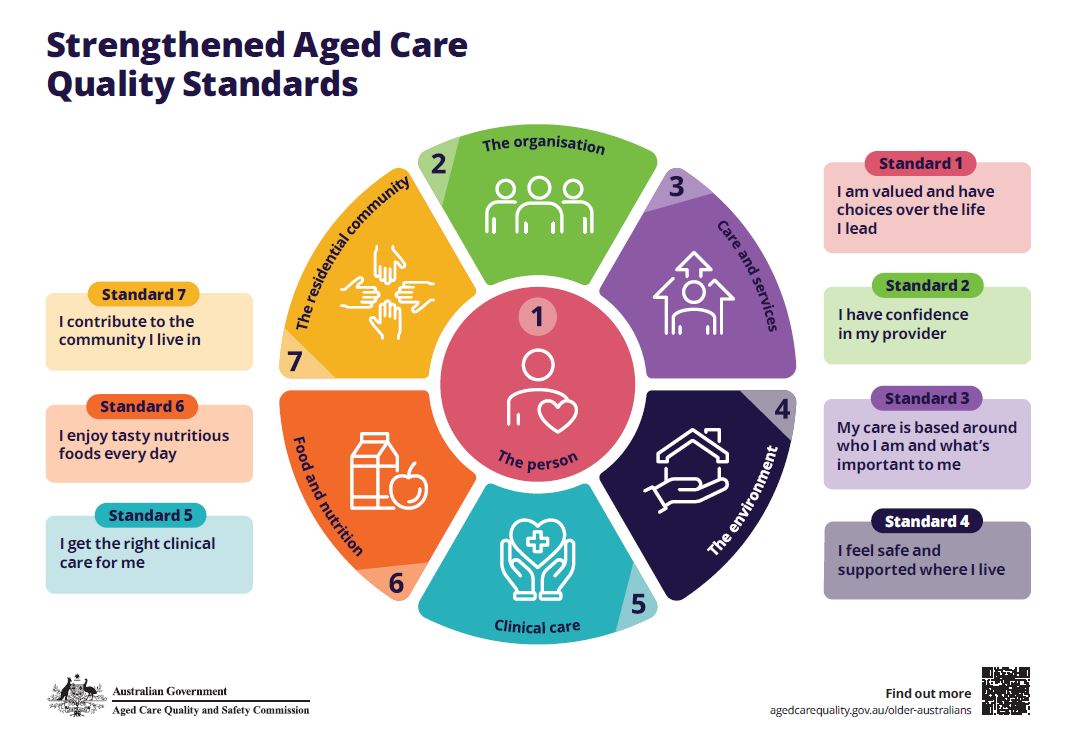
Choosing care for a parent, grandparent or partner is one of the hardest decisions a family can face. There are brochures to read, tours to book and questions you may not know to ask. Fortunately, Australia has a clear set of benchmarks to help. They are the Aged Care Quality Standards, and understanding them gives you a practical checklist for judging any provider.
If you are searching for aged care Wollongong, these standards apply to every approved provider, whether it offers home care or residential care. Knowing what each one means lets you look past the marketing and ask questions that matter. Here are the eight standards in plain language, and what to look for in each.
1. Consumer Dignity and Choice
This standard says older people should be treated with respect, and that their identity, culture and personal choices should shape their care. It covers the right to make decisions, take risks and live the way they want.
What it means for your family: Your loved one should not be fitted into a rigid routine. Ask whether they can choose when they wake, what they eat and how they spend their day. Ask how the provider respects cultural and spiritual backgrounds.
2. Ongoing Assessment and Planning
Care should be based on a genuine understanding of the person’s needs, goals and preferences, and it should be reviewed regularly as their health changes.
What it means for your family: A good provider will sit down with you and your loved one to build a care plan, then revisit it. Ask how often plans are reviewed and how families are included in the conversation.
3. Personal Care and Clinical Care
Every person is entitled to safe, effective care that suits their needs. That includes help with medication, pain management, wound care and managing conditions such as dementia or diabetes.
What it means for your family: Ask about staff qualifications, how clinical changes are spotted early, and how the provider works with local GPs and hospitals. Good clinical care should feel proactive, not reactive.
4. Services and Supports for Daily Living
Health is more than medical care. This standard covers social connection, meaningful activities, meals, emotional support and independence.
What it means for your family: Look at the activity calendar and ask about the food. Are outings, hobbies and time with visitors encouraged? Loneliness is a serious health risk in later life, and a strong provider treats wellbeing as seriously as clinical needs.
5. Organisation’s Service Environment
Whether care happens at home or in a residential setting, the environment should be safe, welcoming and easy to move around in. It should feel like a home rather than an institution.
What it means for your family: On a tour, notice cleanliness, lighting, noise and how staff speak to residents. For in-home care, ask how equipment and home safety are assessed. Trust your instincts about atmosphere.
6. Feedback and Complaints
People should feel safe and supported when they raise concerns, and providers should act on what they hear.
What it means for your family: Ask how feedback is collected and what happens to it. A provider that welcomes complaints and can show examples of changes made because of them is usually one that takes care seriously.
7. Human Resources
Care is only as good as the people delivering it. This standard requires enough skilled, qualified and caring staff to meet residents’ needs.
What it means for your family: Ask about staffing levels, training, staff turnover and how carers are supported. Consistent, familiar faces make a real difference, especially for people living with dementia.
8. Organisational Governance
The provider’s leadership must be accountable for the quality and safety of care, with sound systems for managing risk, finances and continuous improvement.
What it means for your family: You can ask how the provider monitors quality, reports incidents and involves consumers in decisions. Check the provider’s compliance record with the Aged Care Quality and Safety Commission.
Using the Standards as Your Checklist
The eight standards work best as conversation starters. When you visit or call a provider, ask them to explain how they meet each one, and ask for real examples rather than general assurances. Involve your loved one wherever possible. Their comfort, preferences and voice matter most.
Talking to other local families can also help. People who have used a service will give you an honest sense of how it works day to day. Take your time, visit more than once, and don’t be afraid to compare several options before deciding.
Final Thoughts
The Aged Care Quality Standards exist to protect and empower older Australians, and they give families a shared language for asking better questions. A provider that meets them with care and openness is one you can trust with someone you love. Start with these eight areas, trust your observations, and choose the support that lets your family member live with dignity, comfort and connection.
