


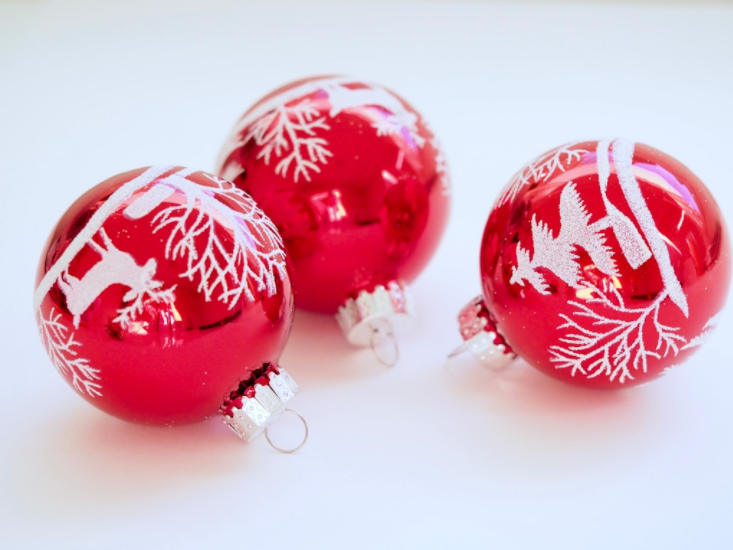
Christmas ornaments may look delicate and effortless when they finally appear on a decorated tree, but creating a traditional handmade glass ornament is a surprisingly complex process. Long before the finished piece reaches a home, shop window or Christmas display, it passes through the hands of designers, glassblowers and painters who gradually transform a simple piece of glass into a decorative object.
Unlike mass-produced plastic decorations, handmade glass ornaments combine craftsmanship with artistic work. Their production requires experience, precision and patience, particularly when unusual shapes or highly detailed designs are involved.
So how does a handmade glass Christmas ornament actually come to life? The journey begins much earlier than the painting stage.
It All Starts with an Idea
Every ornament begins with a concept.
For traditional round baubles, the starting point may be a particular color palette, decorative motif or collection theme. More complicated ornaments can begin as drawings of animals, characters, buildings, objects, food, vehicles or virtually anything else that can be translated into glass.
This stage becomes even more important when ornaments are created specifically for a customer. A company may want decorations inspired by its logo, a retailer may need a distinctive collection for the Christmas season, while an individual customer may be looking for a design associated with a special memory.
The designer must consider not only how the ornament should look, but also whether the proposed shape can actually be produced from glass.
A drawing that appears simple on paper may require adjustments before a glassblower can reproduce it reliably. Proportions, narrow sections, curves and small details all influence how the glass behaves during production.
This combination of creativity and technical understanding is one of the reasons handmade ornament production remains a specialized craft.
Creating the Model and Mold
A classic spherical bauble can be formed directly by an experienced glassblower. More elaborate shapes often require a mold.
Before the mold itself can be produced, a precise model of the ornament must be prepared. This model determines the eventual shape and includes the features that should later appear in the glass.
Once the design has been approved, a metal mold can be created. Its interior reproduces the form of the planned ornament.
The mold must be carefully prepared because even small imperfections may become visible in the finished glass. Depending on the design, it can be polished and engraved so that the intended details appear correctly when the hot glass expands inside it.
This stage illustrates an important difference between handcrafted glass decorations and simple industrial products. Considerable work can take place before the first finished ornament is even produced.
For custom collections, the preparation of a unique model and mold makes it possible to manufacture ornaments with shapes that would be difficult to find in conventional Christmas decoration ranges.
Heating the Glass
The next stage belongs to the glassblower.
Glass tubing or a glass bulb must first be heated until the material becomes soft enough to shape. This requires careful control. If the glass is insufficiently heated, it will not form properly. Excessive or uneven heating can make the material difficult to control.
The artisan continuously works with the glass while it is exposed to the flame, watching how its consistency changes.
Experience is extremely important at this point. Glass does not wait for the craftsman. Once it reaches the correct temperature, the glassblower has a limited period in which to create the intended form.
The work therefore requires both precision and rhythm.
Mouth-Blowing the Ornament
Once the glass reaches the proper temperature, air is blown into it through the stem.
For a traditional round bauble, the glassblower controls the amount of air and rotation of the material to create the desired size and shape.
For molded ornaments, the heated glass is placed inside the prepared mold. The artisan then blows air into the glass, forcing it gently against the internal surface. As the glass expands, it adopts the shape and details of the mold.
Although molds help create consistent forms, this does not turn the process into fully automated manufacturing. The glass still has to be heated, positioned and blown correctly by hand.
Too little pressure may prevent the glass from reaching every part of the mold. Too much pressure or incorrect temperature can damage the ornament.
The artisan must therefore judge the material constantly.
This is also one of the reasons handcrafted ornaments naturally show subtle differences. Even when several decorations are based on the same design, the human element remains part of their production.
Cooling and Preparing the Glass
Freshly shaped glass needs to cool before subsequent stages can begin.
At this stage, the object may already resemble the final ornament in shape, but visually it is still far from the finished Christmas decoration. The transparent glass needs additional treatment before the rich colors, metallic effects and painted details associated with traditional baubles can appear.
Careful handling is essential throughout the process. The walls of blown ornaments are thin, which keeps the decoration lightweight but also means that every stage requires attention.
A single mistake can ruin work completed during the previous steps.
Silvering the Interior
One of the characteristic features of many traditional glass Christmas ornaments is their reflective appearance.
This can be created through silvering.
During this process, a reflective layer is formed inside the glass. Instead of simply applying metallic paint to the outside surface, the treatment gives the ornament a distinctive luminosity from within.
Light striking the decoration is reflected through the colored and painted exterior, helping create the depth and brilliance associated with traditional glass baubles.
Silvering can dramatically change the character of transparent glass. What previously looked like a clear shell begins to resemble the recognizable foundation of a Christmas ornament.
Depending on the desired effect, different finishing techniques may later be used to create glossy, matte, translucent or highly decorative surfaces.
Applying the Base Color
After silvering, the ornament can receive its basic exterior color.
This layer creates the background for the design that will later be painted by hand. It may be a classic Christmas shade such as red, gold, green or white, but modern collections can use virtually any color palette.
The base finish matters more than it might initially appear.
A deep glossy surface creates a very different visual effect from a soft matte coating. Transparent sections can reveal the glass beneath, while metallic finishes can increase reflections. Color combinations can also be selected to match interior design trends, corporate identities or specific seasonal collections.
At this point, the ornament is beginning to look much closer to the finished product, but some of the most detailed work is still ahead.
Hand-Painting Every Detail
Painting is where individual craftsmanship becomes particularly visible.
Decorators use brushes to apply patterns, facial features, lines, shadows, highlights and other small details. Depending on the ornament, this may involve several colors and multiple stages.
Some designs are relatively minimalist. Others contain extremely intricate decorative elements that require a steady hand and considerable concentration.
Glitter, decorative textures and additional finishes may also be applied to selected areas.
The work cannot simply be rushed. A line placed incorrectly on a face, building or geometric pattern can completely change the appearance of the ornament.
At Joyland Factory, traditional glass blowing and hand-painting techniques are used to create both established designs and custom ornaments. This allows the production process to combine repeatable craftsmanship with considerable freedom in shape, color and decoration.
Hand-painting also explains why two handmade ornaments rarely feel completely identical. Tiny differences in brushwork are a natural consequence of having a person create the decoration rather than a machine printing an identical pattern thousands of times.
For many buyers, those variations are not defects. They are precisely what gives handcrafted objects their character.
Finishing and Quality Control
Once the painting and decoration have been completed, the ornament needs to be prepared for use.
The long glass stem used during the blowing and decorating process must be appropriately finished, and a cap or hanger is added so the ornament can be placed on a Christmas tree.
Before packaging, finished pieces should also be inspected.
The surface, painting, shape and general appearance need to meet the expected standard. Because glass ornaments are fragile, careful quality control helps identify pieces that should not proceed to the customer.
Packaging is equally important.
Beautiful craftsmanship means little if an ornament cannot survive transportation. Individual pieces therefore need protection against shocks and pressure, particularly when orders are being shipped internationally or contain ornaments with complicated shapes.
Why Handmade Production Takes Time
Consumers accustomed to industrial manufacturing may wonder why handmade ornaments cannot simply be produced immediately in very large quantities.
The answer becomes clear when the entire process is considered.
A single ornament may involve:
designing,
model preparation,
mold production,
glass heating,
mouth-blowing,
cooling,
silvering,
base coating,
hand-painting,
decorating,
finishing,
quality inspection,
and careful packaging.
Many of these stages cannot be meaningfully accelerated without affecting quality.
Complex custom ornaments require even more preparation because the shape and decoration must first be developed specifically for the project.
This is why companies planning large wholesale or customized Christmas collections often place their orders well before the holiday season. Production capacity becomes particularly valuable as Christmas approaches.
Handmade Does Not Mean Old-Fashioned
Traditional craftsmanship and modern design are not opposites.
The same techniques historically associated with classic Christmas baubles can be used to create contemporary ornaments with unusual colors, humorous concepts, detailed figurines or designs created specifically for international brands.
Modern customers may commission glass ornaments shaped like products, mascots, logos, animals or recognizable objects. Designers can therefore use an old craft to produce decorations that feel entirely current.
This flexibility has helped handmade glass ornaments remain relevant despite the widespread availability of inexpensive mass-produced Christmas decorations.
More Than Just a Christmas Decoration
A handcrafted glass ornament is often kept much longer than a disposable seasonal decoration.
Some become part of family Christmas traditions and return to the tree year after year. Others are purchased as collectible objects, souvenirs or gifts. Custom designs can commemorate weddings, anniversaries, company milestones or other important events.
For businesses, glass ornaments can also become distinctive seasonal merchandise or corporate gifts. A well-designed ornament is not merely printed advertising. It is an object that recipients may actually want to keep and display.
The combination of craftsmanship and personalization gives glass ornaments possibilities extending well beyond conventional Christmas tree decoration.
The Value of Human Craftsmanship
The most interesting part of traditional glass ornament production is not any single technique. It is the number of human decisions involved from beginning to end.
A designer translates an idea into a workable form. A glassblower judges temperature, pressure and shape. A painter decides exactly how each line and detail should appear. Finally, the finished decoration is inspected and prepared for its journey to the customer.
Machines can create enormous numbers of identical decorations quickly. Handmade production serves a different purpose.
Its value lies in detail, individuality and the visible contribution of the people who made the object.
That is why traditional glass ornaments continue to attract customers around the world. They combine the visual appeal of Christmas decoration with techniques that require real skill and experience.
Anyone interested in discovering handcrafted glass Christmas ornaments, exploring different designs or learning more about custom production can visit: https://joylandfactory.com/
Behind every finished ornament lies much more than a coat of paint and a piece of glass. There is an entire sequence of specialist work — from the first sketch to the final brushstroke — that transforms a fragile glass form into a decoration capable of becoming part of Christmas celebrations for many years.
