


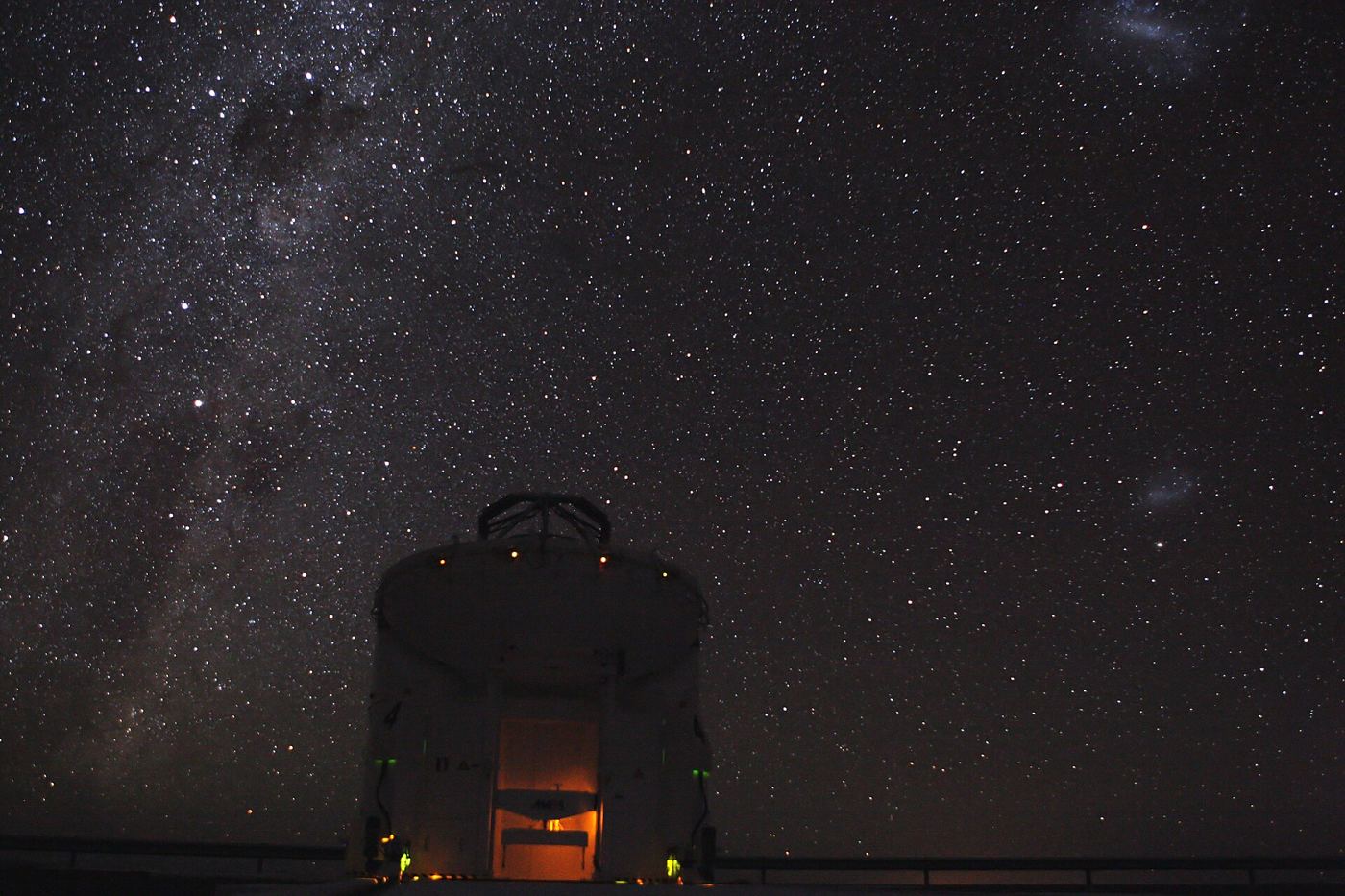
A single telescope, however powerful, can only watch the sky for part of the night, from one location, through one patch of weather. Astronomers are therefore linking mountain observatories across different continents into coordinated networks that hand over the same targets as the Earth rotates, building near-continuous records of changing objects that no one site could capture alone. The approach is proving especially valuable for variable stars, exploding stars and distant objects that brighten and fade on timescales of hours, where a gap caused by dawn or cloud can mean missing the most revealing moment. Shared scheduling software assigns each observatory the observations it is best placed to make, taking account of weather, equipment and the position of the target, while common data formats mean results from Chile, the Canary Islands and Australia can be combined the same morning. Smaller observatories, including university facilities once at risk of closure, gain a new scientific role as essential nodes in a global instrument larger than any of its parts.
What the Evidence Shows
Operating as a network demands trust and standardisation. Teams calibrate their instruments against shared reference stars so measurements from different telescopes can be compared directly, and they agree protocols for announcing urgent targets when something unexpected appears. In return, participants receive access to combined datasets far richer than their own observing time could produce, and early-career astronomers learn collaboration across time zones as a normal part of the job. The networks are also opening time for public and school programmes, since robotic telescopes can queue educational observations between research targets. Funding bodies increasingly favour these cooperative models because they extract more science from existing facilities instead of requiring entirely new construction. As survey telescopes begin discovering far more transient events each night than any team can follow up alone, coordinated networks look set to become the backbone of time-domain astronomy, ensuring that when the sky does something sudden and rare, someone, somewhere, is already watching it. Reporting and analysis from sources such as NASA track the same developments, and specialists following the coordinated telescope network say the direction is now consistent across independent lines of evidence.
The Wider Context
Funding bodies are watching the coordinated telescope network closely because the work sits at the junction of basic curiosity and practical return. Grant panels increasingly ask for a path from discovery to application, while researchers push back that the most valuable uses of fundamental science are rarely the ones written into the original proposal. The tension is productive when both sides stay honest about timescales.
What Happens Next
The long view on the coordinated telescope network is that fields advance by accumulation rather than by single announcements. This result adds a solid, checkable piece to a structure many teams are building, and its authors have shared their data so the piece can be tested from every side. That is how the picture eventually becomes reliable enough to act on. You can follow related developments in our coverage of science.
It is also worth remembering how quickly the picture in this area has changed before. Positions that looked settled a few years ago have been revised as new data arrived, and the same humility is appropriate now. The strongest coverage of this subject, and the most useful advice, tends to come from sources that update their views openly when the facts move, rather than defending an earlier position long after it has stopped fitting the evidence available.
