


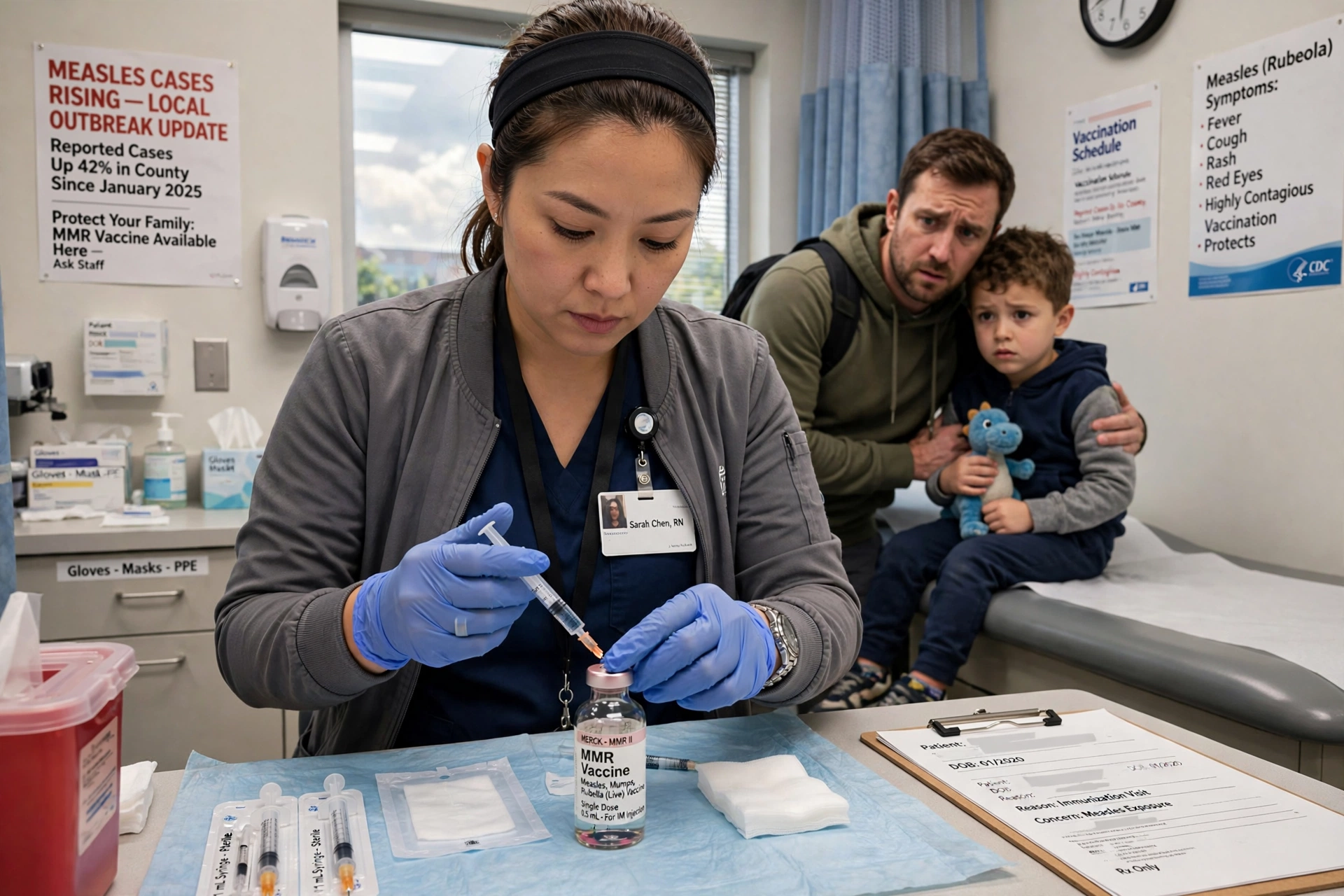
Measles, a disease the United States declared eliminated more than two decades ago, is surging again — and the pace of the increase is alarming public health officials. Case counts have climbed past last year’s total with months still to spare, major outbreaks have taken hold in several states, and smaller clusters keep appearing elsewhere as vaccination coverage continues to slip below the level needed to stop the virus spreading.
The trend is laid out starkly in Associated Press reporting on the surge, which draws on data from the Centers for Disease Control and Prevention. By late July, the CDC had logged 2,318 confirmed cases for 2026 — already more than the 2,289 cases recorded in all of 2025, which was itself the worst year for measles in more than three decades. Health experts say the true number is likely higher, because some people who fall ill never seek treatment and therefore never enter the official count.
The Worst Numbers in a Generation
To understand how unusual the current figures are, it helps to look back. The United States eliminated sustained local transmission of measles in 2000, an achievement built on high uptake of the measles, mumps and rubella (MMR) vaccine. For years afterwards, cases were mostly imported by travellers and contained quickly. The last time annual cases ran at the levels seen now was in the early 1990s, before a two-dose childhood vaccine schedule became the norm.
That progress has gone into reverse. Large outbreaks in South Carolina, Utah and Arizona have accounted for hundreds of infections this year, with cases reported across dozens of states and jurisdictions. Children and teenagers make up the large majority of those infected, and younger children face the highest risk of serious complications. Measles is not a mild childhood rite of passage: it causes fever, cough and a distinctive rash, and it can lead to pneumonia and inflammation of the brain, with long-term consequences and, in some cases, death. Last year’s outbreaks included the first child deaths from measles in the United States in a decade.
Vaccination Gaps Are Driving the Spread
Measles is among the most contagious viruses known. Health officials estimate that around nine in ten unvaccinated people exposed to it will catch it, and the virus can linger in the air of a room after an infected person has left. That is why experts say communities need vaccination coverage of about 95 percent to prevent outbreaks — the threshold known as herd immunity.
National coverage has fallen below that line. MMR vaccination among kindergartners dropped to 92.5 percent in the 2024–25 school year, down from 95.2 percent in 2019–20, and national averages hide far lower rates in some local communities where clusters of unvaccinated children make schools and childcare settings especially vulnerable. The overwhelming majority of recent cases — more than nine in ten in last year’s tally — were in people who were unvaccinated or whose vaccination status was unknown.
The consequences now extend beyond individual outbreaks. International health officials are due to review whether the United States still qualifies for its measles-free status, a designation it has held since elimination was declared in 2000. Losing it would be a symbolic as well as a practical setback, marking measles as once again endemic in the country.
What Health Officials Advise Families to Do
The advice from health officials is consistent and straightforward. The MMR vaccine is highly effective — two doses provide about 97 percent protection — and it has been studied for decades. The CDC’s measles guidance recommends children receive the first dose at 12 to 15 months of age and the second at 4 to 6 years. Adults who are unsure of their vaccination history, especially those planning international travel or living in an area with an active outbreak, are advised to check their records with their doctor or local health department and get vaccinated if they are not already protected.
Officials also urge parents to watch for symptoms after a possible exposure — fever, cough, runny nose, red eyes and then a rash — and to call a clinic before arriving in person if measles is suspected, so staff can limit exposure to other patients in waiting rooms. People who are infected, or who have been exposed and are not immune, may be asked to isolate while they are contagious.
Keeping everyday digital paperwork in order can help too: families who store vaccination records in phone apps should make sure those apps come from trusted sources, a habit similar to the account-safety steps in our guide to easy and secure account access.
An Avoidable Crisis, Experts Say
Paediatric and public health leaders have used unusually blunt language about the surge, describing it as an avoidable failure rather than an unavoidable act of nature. Every element needed to prevent it — an effective vaccine, a known coverage threshold and decades of experience containing imported cases — already exists. What has changed is uptake.
Whether the curve bends this year will depend on how quickly under-vaccinated communities can be reached with catch-up clinics, school-entry checks and clear information for hesitant parents. Until coverage climbs back above the threshold that once kept measles at bay, officials warn, outbreaks like this year’s are likely to remain a recurring feature of the American health landscape rather than a one-off emergency.
