


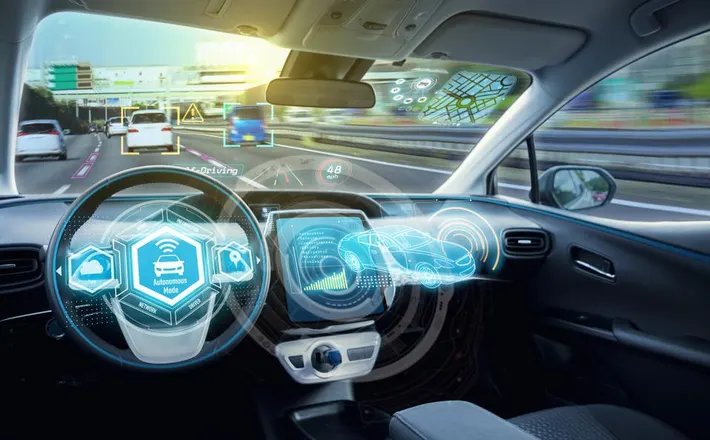
A fragmented, low-trust industry built on phone calls and handshake deals is being reshaped by data, machine learning, and a new generation of AI-native platforms. Here’s what’s changing — and why it matters for anyone who has ever needed to ship a vehicle.
A $12 Billion Industry Running on Outdated Infrastructure
The American auto transport market moves roughly 17 million vehicles every year and generates an estimated $12 billion in annual revenue. By most measures it is a sizeable, mature industry. By almost every other measure, it has been remarkably resistant to modernization.
Booking vehicle transport in 2024 looked nearly identical to the process in 2004. A customer submits a request on a broker’s website. A salesperson calls back — eventually. A quote is provided verbally, often intentionally low to win the booking. The price changes before pickup. The customer has little visibility into which carrier was assigned, when the vehicle will actually be collected, or where it is during transit. Disputes are handled manually, and resolution is slow.
This is not a niche complaint. Consumer protection agencies regularly list auto transport among the top categories for freight-related complaints. The core problems — opaque pricing, unreliable communication, and carrier vetting gaps — are structural. They exist because the industry was built around brokers as information middlemen, and no one disrupted that model for two decades.
That is beginning to change.
Why AI Is the Right Tool for This Particular Problem
Auto transport pricing is, at its foundation, a data problem. The cost of moving a vehicle from Phoenix to Atlanta depends on dozens of real-time variables: available carrier capacity on that route, fuel prices, vehicle dimensions and weight, pickup and delivery windows, seasonal demand patterns, and current weather or traffic conditions along the corridor. No human broker, working from a spreadsheet and intuition, can accurately process all of those inputs simultaneously and price them correctly at scale.
Machine learning systems can. And when they do, the results are meaningfully better: faster quotes, more accurate pricing, and matches between vehicles and carriers that optimize for reliability — not just whoever picks up the phone first.
This is the core premise behind Haulin.ai, a Texas-based platform that has built its entire product around replacing the manual brokerage model with AI-driven infrastructure. The company’s pricing engine processes real-time carrier availability, route-specific demand signals, and vehicle-level data to produce an accurate, locked quote in under 60 seconds. What arrives in the customer’s quote is the price they pay — no adjustments, no callbacks, no renegotiation at pickup.
The cost of moving a vehicle is a data problem. Machine learning solves it faster and more accurately than any human broker working from a spreadsheet.
For consumers who have spent years navigating the frustrating opacity of traditional brokers, the contrast is significant. Searching for the best auto transport companies with transparent pricing used to return pages of aggregator sites and review forums where customers compared bad experiences. Platforms like Haulin.ai are redefining what that search should actually deliver.
Tessa: What 24/7 AI Support Actually Looks Like in Logistics
Transparent pricing solves the first friction point in auto transport. Communication — or the chronic lack of it — is the second.
Legacy brokers are often unavailable outside business hours. Carriers frequently go silent during transit. Customers with time-sensitive needs — a vehicle that needs to be at a new home before the move-in date, a purchase that needs to arrive before a deadline — have historically had no reliable way to get answers after 5 p.m. on a Friday.
Haulin.ai built Tessa to directly address this gap. Tessa is a 24/7 AI agent trained specifically on auto transport logistics — pricing structures, carrier matching, route timelines, and shipment tracking. It is available via both chat and voice, at any hour, and it handles everything from initial quote requests to mid-shipment status updates without requiring a human agent to be on call.
Unlike generic customer service chatbots that are limited to scripted FAQ responses, Tessa is trained on the operational specifics of vehicle shipping. It can explain the difference between transport options, walk a customer through the booking process, flag potential issues with a route, and escalate to a human agent when a situation genuinely requires it. The system learns continuously from each completed transport, compounding its accuracy over time.
“The auto transport industry has had a customer service problem for decades,” said a Haulin.ai spokesperson. “Tessa was built to solve it — not with a FAQ page or a hold queue, but with real, instant, intelligent support available around the clock.”
From Cross-Country Relocations to Open Carrier Shipping
The AI infrastructure underpinning Haulin.ai supports a broad range of use cases, from the straightforward to the complex.
For most consumers moving a standard vehicle, open car shipping on a multi-vehicle carrier is the most cost-effective and widely used transport method. Haulin.ai’s carrier matching algorithm selects the most efficient carrier for each open transport route, weighing transit time, carrier performance history, and current route load — not just who submitted the lowest bid.
For customers with more complex or ongoing vehicle movement needs, Haulin.ai also offers a dedicated car relocation service designed to handle the logistics of moving vehicles as part of a broader relocation — whether that’s a household move, a corporate transfer, or a seasonal migration. The platform’s AI handles the scheduling and carrier coordination, so customers are not left managing logistics on top of everything else a relocation involves.
For high-value vehicles — luxury cars, low-clearance exotics, and collector models — Haulin.ai provides enclosed transport options with vetted premium carriers, climate-controlled trailers, and elevated coverage limits. A recent enclosed shipment of a Bugatti Veyron was completed with 97% route efficiency and delivered within 48 hours, a benchmark that reflects what AI-optimized carrier matching can produce when the stakes are highest.
Rebuilding Trust Through Carrier Vetting and Transparency
One of the most persistent problems in auto transport is carrier fraud. The mechanics of the traditional broker model — where a broker collects a deposit and then assigns a carrier through an opaque network — create opportunities for bad actors to operate with minimal accountability. Consumer forums are full of accounts of carriers that accepted bookings and then became unreachable, or delivered vehicles with undisclosed damage.
Haulin.ai’s approach to this problem is systemic rather than reactive. Every carrier in the platform’s network is FMCSA-verified and must maintain active federal licensing to remain eligible for route assignments. Carrier vetting is built into the matching algorithm — not a manual step that happens when a human broker has time to check. Real-time shipment tracking is available throughout every transport, giving customers continuous visibility from pickup to delivery rather than the silent intervals that define the traditional experience.
The result is a platform where transparency is the default, not the exception.
A Platform That Gets Better With Every Shipment
What sets Haulin.ai apart from technology that has been grafted onto a traditional brokerage framework is that its AI infrastructure is designed to compound in capability over time. Each completed shipment — every route, every carrier match, every delivery outcome — feeds data back into the pricing engine, the carrier selection model, and Tessa’s operational knowledge base.
This means the platform’s accuracy improves continuously. Pricing models sharpen as route-level data grows. Carrier matching becomes more precise as performance history accumulates. Customer interactions with Tessa become more efficient as the system processes a wider range of real queries.
For an industry where competitors are still relying on static pricing tables and relationship-based carrier networks, this architecture represents a durable structural advantage. The gap between AI-native platforms and manual brokerages will widen with every shipment — not narrow.
What Comes Next for Auto Transport
The $12 billion auto transport market has been waiting for a technology-led consolidation for years. The barriers to disruption — carrier fragmentation, the complexity of real-time logistics pricing, the need for 24/7 operational support — were significant. AI infrastructure has reached the point where those barriers are no longer insurmountable.
Haulin.ai’s trajectory — built on instant transparent pricing, verified carrier networks, and continuously improving AI support — positions it as one of the central players in what the next decade of vehicle shipping looks like. The industry’s transformation is underway. The companies that defined auto transport over the past 20 years built their businesses on information asymmetry. The ones that define the next 20 years will be the ones that eliminated it.
Haulin.ai is betting it’s already done that.
About Haulin.ai
Haulin.ai is an AI-powered auto transport platform headquartered in Leander, Texas. The company provides nationwide vehicle shipping with instant quote generation, real-time carrier matching, and 24/7 AI support through its virtual assistant, Tessa. Haulin.ai serves customers moving standard, luxury, classic, and exotic vehicles across all U.S. routes.